Dr. Nicholas Jones is a double-board certified plastic surgeon certified by the American Board of Plastic Surgery and the American Board of Surgery specializing in both aesthetic and reconstructive surgery.
Remember, it is vital that you make your initial post-op appointments and be seen by Dr. Nicholas Jones. He will see you at least once in the first two weeks, then at one month, 6 months and 1 year.

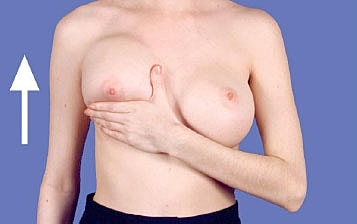
Massage breast up and medially and hold for a few seconds then release; (Perform exercise 3-4 times daily (10 repetitions).

The Jackson-Pratt drain system is made of a soft plastic bulb, a catheter, and a drainage outlet cap. The other end of the drain is inside of your body, just beneath the skin. The purpose of the drain is to draw out fluid that would otherwise collect under the skin. In order for the system to work, the bulb should be compressed at all times except when you are emptying the drainage.
We typically keep the tube in for 1-2 weeks, however each case is very individualized. It is important for you to record your output daily and bring records with you to all your follow-up appointments so we can determine if it is time to remove your drains.
Caring for your drain at home involves the following:
These steps will help move clots through the tubing and promote the flow of drainage. Do this before you empty and measure your drainage.
You will need to empty your Jackson Pratt in the morning, lunch and afternoon.
Equipment Needed:
1. Measuring container2. JP drain output record
Steps to Follow:
1. Prepare a clean area on which to work and gather your equipment.2. Wash your hands thoroughly with soap and water. Dry them thoroughly.3. Unplug the stopper on top of the Jackson Pratt. This will cause the bulb to expand.4. Do not touch the inside of the stopper or the inner area of the opening on the bulb.5. There are hash lines on the drain with measurements in mL (typically up to 50mL), record the amount.6. Turn the Jackson Pratt upside down, gently squeeze the bulb, and pour the contents into the measuring container (Figure 2).7. Turn the Jackson Pratt right side up.8. Squeeze the bulb until your fingers feel the palm of your hand.9. Continue to squeeze the bulb while replugging the stopper.10. Check to see that the bulb remains fully compressed to assure a constant gentle suction.
11. Pin the collar of your Jackson Pratt securely to a piece of your clothing. Do not allow your drains to dangle. A “fanny pack” or loose belt bag may be helpful to hold the drain.12. Check the amount of drainage in the measuring container.13. Record this amount on your sheet.14. Empty the drainage down the toilet and rinse the measuring container with water.15. At the end of each day, add the total amount of drainage for the 24-hour period and record it in the last column of the drainage record.16. If you have more than one drain, measure and record each separately.
Once you have emptied the drainage, wash your hands again. Check the area around the catheter insertion site.
Look for tenderness, swelling, or pus from the insertion site. If you have any of these or a temperature of 101° F (38.3° C), you may have an infection. Call our office at 404-777-8825. Sometimes the drain c auses redness the size of a dime at the insertion site. This is normal. Apply antibiotic ointment around the tubing and dress the wound with a piece of gauze attached by tape.
1. BULB NOT COMPRESSING
WHAT TO DO?
2. NO DRAINAGE, SUDDEN DECREASE IN DRAINAGE
WHAT TO DO?
3. CATHETER FALLS OUT FROM INSERTION SITE
4. REDNESS GREATER THAN THE SIZE OF A DIME, swelling, heat, or pus around drain insertion site
Helpful Hints:
Please bring this form with you to each office visit.
IF YOU HAVE ANY CONCERNS OR PROBLEMS, PLEASE CALL US IMMEDIATELY. IF IT IS URGENT OR AN EMERGENCY DIAL 911 OR REPORT TO YOUR NEAREST EMERGENCY ROOM.